
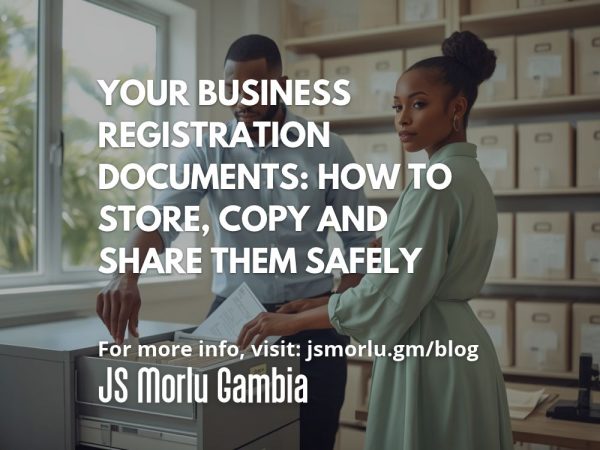
A bank asks a business owner for the registration certificate. The original is in a drawer at home, and the owner is at the shop. Two days pass before the paper arrives, and the loan conversation stalls.
Could you find your registration documents in five minutes?
This happens more often than owners expect. Registration papers are important, yet they are used only a few times a year. When they are needed, the need is usually urgent.
Which Documents to Keep Together
Start with the papers that prove your business exists and who owns it. Keep them together in one place, so nobody has to search for them.
- Your certificate of registration and any confirmation you received
- Documents showing the owners, partners or directors
- Business name papers
- Renewal receipts or confirmations
- Any licences or permits your business holds
The exact set depends on your business type, so check what was issued when you registered. Add new papers to the set whenever something is renewed or changed.
Include documents for each owner or partner too. If someone leaves or joins the business, update the file at the same time. Otherwise, the papers describe a business that no longer exists.
Put the list on the inside of the folder or cabinet door. Anyone who opens it can see at a glance what should be there, and what is missing.
Keeping Originals Safe
Originals are hard to replace, so treat them with care. Store them in a lockable cabinet or box, in a dry place away from direct sun.
Humidity, water and pests can damage paper quickly. A simple plastic sleeve for each document gives extra protection.
Limit who can open the cabinet, and write down what is stored inside. A short list tells you straight away if something has gone missing.
Avoid carrying originals in a bag or leaving them at the shop counter. Documents that travel are the ones that get damaged or lost. If you need to show one, take a copy first.
Making Copies and Digital Backups
Make clear copies of every important document. Scan them too, so you have a digital version you can send quickly.
Give each file a clear name, such as the document type and the year. Save the scans in two places, for example a protected folder and a secure backup.
Use a password on the folder where you keep them. Avoid leaving sensitive documents in open chat groups where many people can see them.
Check each scan after making it. A blurred or cropped page is not much use when a bank asks for it. Replace it straight away, while the original is still in your hands.
Sharing Documents Safely
Share only what the other person needs. A bank may need your registration certificate, but a supplier may not need your full file.
Give copies instead of originals unless the organisation specifically requires an original. If you must hand over an original, ask for a receipt and a date for its return.
Keep a short note of what you shared, with whom and why. It helps you follow up and know where your papers have been.
Be careful with documents that carry personal details, such as identification. Share them only with people you trust and for a clear reason. If a copy is no longer needed, ask for it to be returned or deleted.
A Simple Document Habit
Set a reminder once a year to review your registration file. Add renewed papers, check that the details are still correct and remove outdated copies safely.
Tell one trusted person where the documents are kept. If you are away, the business can still respond when someone asks for them.
A little order now can save days later. Where are your registration papers right now?
Tie the review to a date you already remember, such as your renewal date. That way, the habit follows something that happens anyway. A simple note in your calendar is enough.
Keep Your Papers Ready When You Need Them
JS Morlu Gambia can assist with business registration and help you organise the documents and key dates your business should keep track of. Our accounting team can also set up simple record filing alongside your books. A little structure now can help you respond quickly when a bank, partner or customer asks for your papers.
JS Morlu Gambia is a professional accounting firm and property valuation specialist based at Salameh Complex, Sukuta Highway, Brusubi, Kombo North, West Coast Region, The Gambia. We serve businesses, NGOs, and institutions across Banjul, Serekunda, Brikama, and throughout the country with structured financial reporting, compliance support, independent property valuation, and coordinated audit assistance designed to strengthen financial transparency and support sustainable growth.