
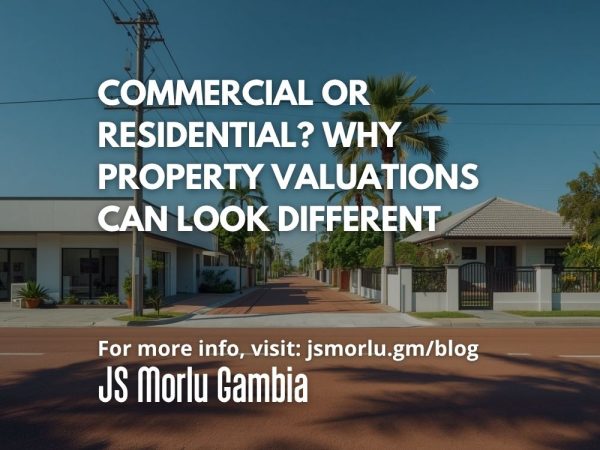
An investor owns two properties: a family house and a shop unit on a busy road. Valuations are requested for both. The reports look very different, and the investor wonders why.
Should two properties be valued in exactly the same way?
This is a common source of confusion. Owners often assume a valuation is a single, standard exercise. In practice, the property type and the reason for the valuation shape what the valuer examines.
Residential Property: What Counts
For a house, a valuer typically looks at size, condition, layout and the number of rooms. They also consider the neighbourhood, access and available utilities.
Recent sales of similar homes nearby are often a useful guide. They show what buyers have actually paid.
Buyers of homes usually value comfort, safety and convenience. These qualities can influence the figure.
Condition matters, but so does what surrounds the property. A well-built house on a street with poor drainage or a difficult road may be valued differently from the same house on a well-connected street.
Age and maintenance matter too. A property that has been looked after well usually presents better than one with visible damp, cracks or unfinished work.
Commercial Property: What Else Counts
A shop, office or warehouse is judged as a place of business. Visibility, customer access, parking and room for deliveries can all matter.
If the property is rented out, the valuer may also look at the rent and the lease terms. Income can be a major part of what makes a commercial property valuable.
Layout and permitted use also play a part. A building that suits many kinds of business may be easier to sell or let.
Think about a shop on a quiet side street and a similar shop on a busy junction. The buildings may look alike, yet customers pass one far more often than the other. That difference can show up in the valuation.
Permitted use is worth confirming early. A building used differently from what its documents say may raise questions with a valuer or a lender.
Why the Approach May Differ
Valuers choose methods that suit the type of property and the purpose of the valuation. A home might lean more on comparable sales, while an income-producing property may place more weight on rent.
Because of this, the reports can look quite different even for the same owner. The structure, the evidence and the wording will often reflect the property type.
The figures also depend on the purpose, such as a loan, a sale or insurance. Always check what each report was written for.
None of this means one method is better. Each is a way of answering the same basic question: what is this property worth for this purpose? The best approach depends on the property and the evidence available.
What to Prepare Before the Valuation
Good documents help the valuer work faster and with more confidence. Gather what you can before the visit.
- Title documents, and details of any restrictions on the property
- Lease agreements and rent records, if the property is let
- Records of recent repairs or improvements
- Building plans or approvals, if available
- A clear description of how the property is used
Make sure the valuer can access every part of the property. If a section is locked or unused, tell them in advance. A complete picture helps avoid assumptions.
Asking the Right Questions
When you receive the report, read it with a few questions in mind. What does the figure represent, and what evidence supports it?
Ask about any assumptions the valuer made. If something looks unclear, ask for it to be explained.
Compare only like with like. Is the figure you are reading really measuring the same thing as the last one?
If your lender or a buyer asks for a particular type of valuation, tell your valuer at the start. The purpose can change what the report needs to include.
Keep the report safe and note its date. Property values can change, so an old report may not answer today’s question.
Understand the Number Behind Your Property
JS Morlu Gambia provides independent property valuation for owners, lenders and investors. We can explain how use, location, condition and, where relevant, rental income were considered, so you understand the figure and not just the number. A clear valuation can support decisions about lending, selling, letting or planning your next investment.
JS Morlu Gambia is a professional accounting firm and property valuation specialist based at Salameh Complex, Sukuta Highway, Brusubi, Kombo North, West Coast Region, The Gambia. We serve businesses, NGOs, and institutions across Banjul, Serekunda, Brikama, and throughout the country with structured financial reporting, compliance support, independent property valuation, and coordinated audit assistance designed to strengthen financial transparency and support sustainable growth.