
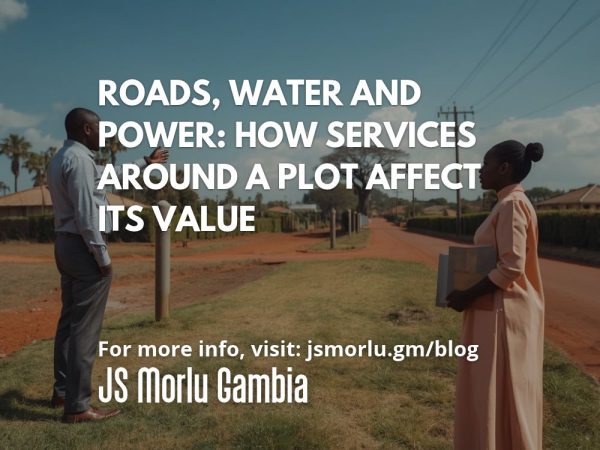
Two plots sit side by side, the same size and the same shape. One has a graded road, a water line and power nearby. The other is reached by a sandy track with no services close by.
Would a buyer, a bank or a valuer treat them the same? Almost certainly not, and the reasons are worth understanding before you buy, sell or borrow against land.
A valuer looks beyond the plot itself. The surroundings often explain why similar plots carry different values.
Value is rarely about size alone. Access, services and the surrounding area all play a part.
Access: How You Reach the Plot
Access is often one of the first things a valuer checks. A plot on a maintained road is easier to reach, to build on and to resell.
A plot reached by a narrow or seasonal track may be harder to use, especially in the rainy season. Delivery trucks, customers and staff all need a reliable way in.
Legal access matters too. The valuer may ask how the route to the plot is secured and who else uses it.
Ask about the condition of the road in different seasons. A road that is fine in the dry season may be hard to use after heavy rain.
Water and Power Nearby
Services close to a plot can reduce the cost of building and operating. A water line or power supply nearby may be easier to connect than one that is far away.
Distance matters because connection costs can rise with it. A buyer may count those costs when deciding what to pay.
A valuer usually notes what is available now and what is only planned. Plans that are not yet confirmed are normally treated with caution.
Ask local suppliers what a new connection usually involves. Even a rough idea of the cost and the waiting time helps you judge what a plot is really worth.
The Area Around the Plot
Nearby uses affect how a plot can be used. A plot among homes, shops and small businesses may suit different buyers than one beside heavy industry.
The condition of nearby buildings and the level of activity also tell a story. A busy, active area may support stronger demand than a quiet, isolated one.
Drainage is worth checking too. Low ground that floods in heavy rain can reduce how useful, and how valuable, a plot is.
Consider future change in the area as well. New roads, shops or housing may raise demand, while heavy traffic or noise can reduce it.
What to Bring to the Valuer
You can help the valuation by sharing clear information. Gather what you can before the visit.
- The survey plan and ownership papers
- Details of any road, water or power connections
- Photos of the plot and the approach road
- Any past offers or valuations you have received
Tell the valuer about future plans you know of, such as road works. Say where the information comes from.
The more complete the picture, the easier it is for the valuer to explain the reasons behind the figure.
Walk the boundaries with the valuer if you can. Pointing out markers and access routes in person can save time and avoid misunderstandings.
Look at the Whole Picture Before You Decide
Before buying land, walk the route in the rainy season if you can. Ask neighbours how reliable the services are.
A lower price may reflect missing services. Ask what it would cost to add them, and how long it may take.
Compare the plot with similar ones nearby. Differences in access and services often explain why asking prices vary so much.
Which services does your plot depend on today? An independent valuation can help put a figure on the difference.
Know What Your Land Is Really Worth
JS Morlu Gambia can provide independent property valuations for land and commercial property. Our team considers access, services, location and condition, and explains how each factor shaped the result in plain language. A clear valuation report can help you negotiate a fair price, support a loan application or plan an investment with more confidence.
JS Morlu Gambia is a professional accounting firm and property valuation specialist based at Salameh Complex, Sukuta Highway, Brusubi, Kombo North, West Coast Region, The Gambia. We serve businesses, NGOs, and institutions across Banjul, Serekunda, Brikama, and throughout the country with structured financial reporting, compliance support, independent property valuation, and coordinated audit assistance designed to strengthen financial transparency and support sustainable growth.