
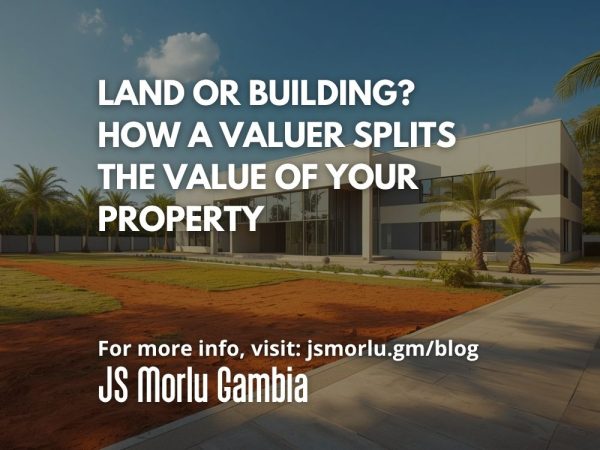
A business owner asked for a valuation of his old warehouse. He expected a low number because the building looked tired.
The valuation came back higher than he expected. Most of the value was in the land.
Why Valuers Separate Land and Building
A property is often made up of two parts. There is the land, and there is what has been built on it.
They behave differently over time. A building tends to wear down with age, while land can hold its value.
Splitting the value helps explain what you actually own and why the figure looks the way it does.
What Affects the Land Value
- Location and access to roads
- The size and shape of the plot
- How the land can legally be used
- Demand for similar plots nearby
What Affects the Building Value
- Age and condition of the structure
- Quality of the materials and construction
- Layout and how well it suits the use
- Repairs and improvements made over time
What This Looks Like in Practice
The owner’s warehouse was twenty years old. The roof needed work and the walls were worn.
Even so, the plot sat in a busy area that buyers wanted. The land carried most of the value.
A Second Example: The New Building on Weak Land
A different owner built a modern shop on a plot far from main roads. The building was in excellent condition.
The valuation was lower than expected. Poor access limited what the land was worth.
Common Mistakes to Avoid
- Assuming a newer building always means a higher value
- Ignoring the land’s location and legal use
- Skipping repairs that reduce the building’s value
- Expecting the cost of construction to equal the market value
Why It Matters for Loans and Planning
Banks look closely at both parts when they consider a property as security. A clear split shows what is solid and what is not.
For owners, it also helps with planning. You can see whether investing in the building is likely to be worthwhile.
How Valuers Think About Use
Land is valued partly by what it can be used for. A plot that can legally host a shop is often worth more than one limited to farming.
A valuer checks the permitted use before finalising the number.
What a Building Inspection Reveals
A valuer looks at the building for cracks, damp, roof problems and general wear. These findings can reduce its value.
Fixing small issues before the visit can help. It shows the property has been looked after.
How the Two Values Add Up
Once each part is assessed, the valuer combines them to reach the overall figure. The result also reflects market demand and sales of similar properties.
That is why two similar buildings can have very different values. The land under them may not be alike.
Asking for the breakdown helps you understand the number, not only accept it.
Land Does Not Always Win
Do not assume the land always carries the value. A new, well-built property in a good location can be worth far more than the plot alone.
The balance depends on the location, the permitted use and the condition of the building.
Questions to Ask Your Valuer
- How was the land value reached?
- Which factors affected the building most?
- Which sales of similar properties were used?
- What repairs could improve the value?
A Simple Habit Worth Adopting
Keep a folder with your title documents, plot details and records of improvements. Add to it whenever you repair or extend the property.
Good records help your valuer see the full picture.
How Improvements Fit In
Not every improvement adds the same value. A new roof may protect the building, while a fresh coat of paint may add very little.
Keep receipts and dates for larger works. They help show what was done and when.
Getting a Clear Valuation
An independent valuation explains how each part was assessed. Ask your valuer to walk you through the reasoning.
Understanding the split helps you make better decisions about your property.
Know Exactly Where Your Property’s Value Comes From
A single number rarely tells the whole story. Our independent property valuation reports explain how the land and the building were each assessed, and what the result means for loans, planning or a sale. We walk you through the reasoning, so you understand the figure and not only the total.
JS Morlu Gambia is a professional accounting firm and property valuation specialist based at Salameh Complex, Sukuta Highway, Brusubi, Kombo North, West Coast Region, The Gambia. We serve businesses, NGOs, and institutions across Banjul, Serekunda, Brikama, and throughout the country with structured financial reporting, compliance support, independent property valuation, and coordinated audit assistance designed to strengthen financial transparency and support sustainable growth.