
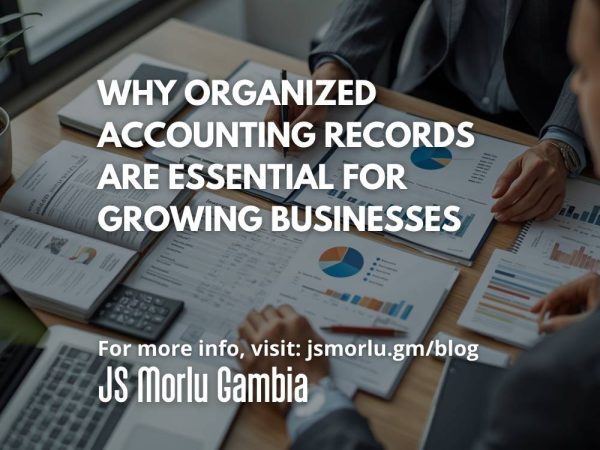
As businesses expand, financial transactions naturally become more complex. Increased sales activity, supplier relationships, payroll obligations, and operational expenses all require structured financial management.
Organized accounting records provide the foundation for understanding how a business performs financially. Without reliable accounting systems, businesses may struggle to monitor financial health, track profitability, or make informed decisions.
What Organized Accounting Records Include
Structured accounting systems track a wide range of financial activities that occur during normal business operations.
These commonly include:
- Sales and revenue transactions
- Operational expenses and supplier payments
- Accounts receivable from customers
- Accounts payable to suppliers
- Cash flow movements across bank accounts
- Payroll and employee-related expenses
Maintaining these records consistently allows businesses to generate accurate financial statements and monitor performance over time.
Challenges When Records Are Disorganized
Businesses that rely on informal bookkeeping often face several challenges as operations grow.
Common issues include:
- Missing or incomplete transaction records
- Inconsistent expense categorization
- Difficulty preparing financial statements
- Limited visibility into cash flow trends
- Challenges when applying for loans or financing
These challenges can create uncertainty about the financial position of the business.
Even when a business is profitable, poor recordkeeping can make it difficult to demonstrate financial stability to lenders, investors, or partners.
The Importance of Reliable Financial Reporting
Organized accounting records allow businesses to prepare structured financial reports that reflect actual business performance.
These reports typically include:
- Statement of financial position (balance sheet)
- Profit and loss statement
- Cash flow statement
Reliable reporting helps business owners understand revenue trends, cost structure, and liquidity.
Clear financial data also supports strategic planning and operational decision-making.
Supporting Financing and Partnerships
Businesses seeking financing or partnerships must demonstrate financial discipline. Organized accounting records make it easier to provide reliable documentation during loan applications, investor discussions, or audit reviews.
Financial transparency strengthens credibility with banks, partners, and institutions.
Practical Tips for Maintaining Organized Records
Businesses can improve recordkeeping by implementing simple but consistent practices:
- Record transactions regularly rather than waiting until month-end
- Maintain digital copies of invoices and receipts
- Reconcile bank accounts monthly
- Separate business and personal expenses
- Use structured accounting systems where possible
Even small improvements in recordkeeping can significantly strengthen financial reporting.
Final Thoughts
Reliable accounting records help businesses understand their financial position and plan for future growth.
Organizations that maintain structured accounting systems are better prepared to manage operations, pursue financing opportunities, and maintain financial transparency in an increasingly competitive business environment.
JS Morlu Gambia is a professional accounting firm and property valuation specialist based at Salameh Complex, Sukuta Highway, Brusubi, Kombo North, West Coast Region, The Gambia. We serve businesses, NGOs, and institutions across Banjul, Serekunda, Brikama, and throughout the country with structured financial reporting, compliance support, independent property valuation, and coordinated audit assistance designed to strengthen financial transparency and support sustainable growth.